

FORT WAYNE, Ind. (WOWO) — A revised version of the controversial casino relocation measure, House Bill 1038, is advancing through the Indiana General Assembly with one more reading expected before a Senate vote, possibly as soon as Wednesday. The proposal has undergone significant changes in recent days, including 10 Senate amendments introduced Monday, with one adopted.
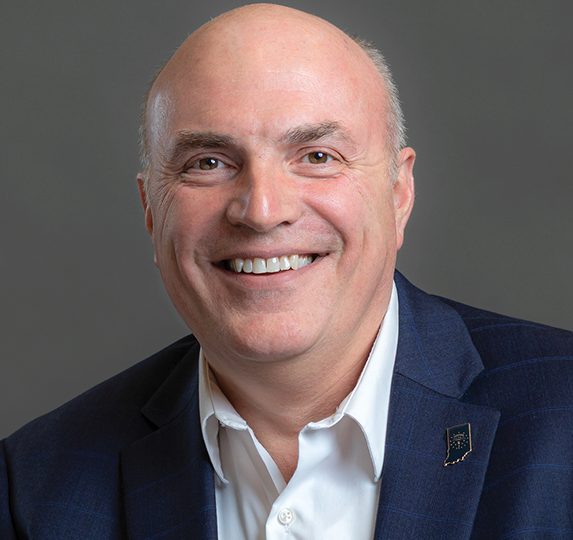
Appearing on Fort Wayne’s Morning News with Kayla Blakeslee, Allen County Commissioner Ron Turpin outlined the latest version of the bill and how it differs from the House-passed measure.
“As we talked about a couple weeks ago, when the House passed their bill, it was a transference of the existing license in Southern Indiana to one of four locations,” Turpin said. “So the Senate bill has changed all that. They took out Wayne County, so it’s just Northeast Indiana now. And it’s not the transference of a license — it’s granting an entire new license.”
Under the Senate revisions, the legislation would convert one of two unused off-track betting licenses in Indiana into a full casino license. The second unused license would be eliminated. The bill also includes provisions addressing underperforming casinos in the future.
“It also says that if you have underperforming casinos in the future, what will happen with that is those will go away,” Turpin said. “So it’s trying to decrease the number of locations throughout the state.”
Another significant change involves the removal of referendum language. The House version included “may” language allowing a county to hold a local referendum before a casino could be established. The current Senate version omits that provision.
“The House bill had ‘may’ language, so a county may have a referendum,” Turpin said. “This one doesn’t mention it at all. So that is a big change that’s in there.”
The Senate proposal also raises the financial threshold for prospective casino operators. Turpin said applicants would be required to commit $650 million — $500 million toward construction and related development and $150 million to the state.
“One hundred million would go to a casino fund, and then $50 million for a new fund that would help communities if a casino closed down in the future,” he said.
Turpin described the legislative process as fluid in the final days of the short session.
“As you mentioned yesterday alone, there were 10 amendments. The Senate only approved one of them, which was a slight verbiage change,” he said. “The Senate will probably vote on this tomorrow. And then the House and Senate will have to negotiate. Is there one that they like better than the other? Do we kind of keep a little bit of both and put some new language in?”
Lawmakers are working up to the statutory end of session later this week. Turpin characterized the pace as typical for a short session year.
“I think this is just part of the normal process,” he said. “They have a lot of bills that are going through a very short time frame. So they’re sprinting to the end to try to make sure they get those things that are important to leadership passed while they can.”
Turpin noted that several amendments removed specific counties from consideration, describing the use of amendments as procedural tools to keep legislation viable before adjournment.
“Otherwise it all would die when Friday comes,” he said.
On the question of voter involvement, Turpin acknowledged concerns about the absence of referendum language but said he remains committed to public input.
“A referendum is something you and I have talked about for almost two years,” Turpin said. “It’s kind of a table stakes thing that I’ve always said to me was important, because I think the voters need to be heard on this issue.”
If the final bill does not include a referendum option, Turpin said alternative methods could be used to gauge public sentiment.
“If the referendum is not an option, I think there are still other ways to get voter feedback,” he said. “I am committed to making sure that I hear as many voters’ voices as possible on this.”
Turpin also cautioned that the financial requirements could deter interest from operators.
“A casino operator has to want to go somewhere,” he said. “And it may not be any one of these three counties, quite frankly. I mean, $650 million may be too high of a mark for any of them. And they may say, you know what? No. And so then it’s a moot point.”
In separate remarks during the interview, Turpin addressed news that Wendy Davis has filed exploratory paperwork, a step often associated with potential future candidacy for elected office.
“I’ve known Wendy for a long time, have deep respect for Wendy,” Turpin said. “She and I have talked over some time about kind of where the Lord is leading her. I’ve encouraged her to pursue it. I totally support it.”
Turpin noted that as a judge, Davis faces certain constraints related to political activity.
“I’m very excited about the possibility,” he said. “And so I look forward to when she is able to finally say what it is she wants to do, fully supporting her in it.”
Lawmakers are expected to take further action on House Bill 1038 before the end of the week. Any differences between House and Senate versions would need to be reconciled before a final vote.
