

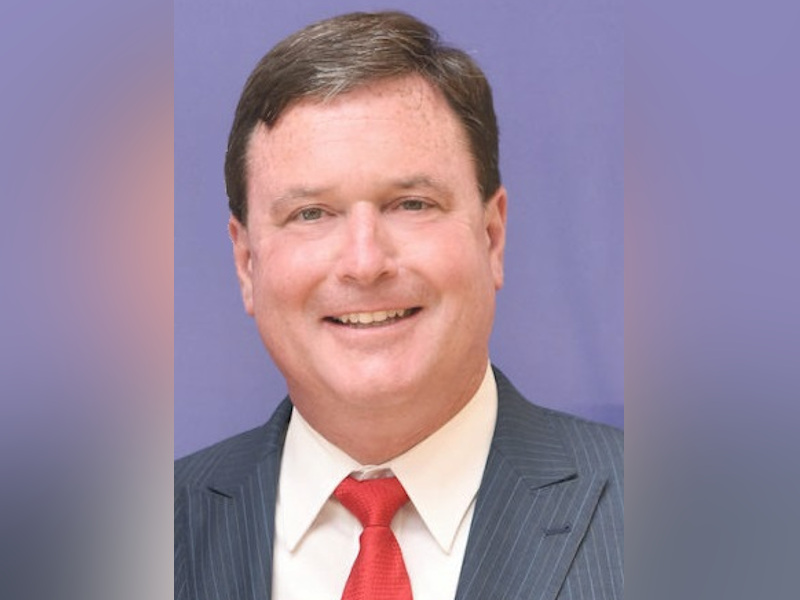
INDIANAPOLIS (WOWO) — Indiana Attorney General Todd Rokita said a stronger version of the Indiana Fairness Act is moving forward after House lawmakers restored key enforcement language that had been stripped out by the Senate, setting up a final test for the legislation aimed at requiring local cooperation with federal immigration authorities.
Rokita, speaking in a radio interview this week, said the House-backed language — originally authored by Rep. J.D. Prescott — reasserts the attorney general’s office as the primary enforcer of the law, reversing a weaker Senate approach that shifted oversight to the Department of Correction.
“It’s actually now the better bill,” Rokita said. “We support it, and we’re going to get through the finish line and go on with our lives.”
The Fairness Act is designed to ensure that local sheriffs comply with federal Immigration and Customs Enforcement detainers. Rokita said most Indiana sheriffs already cooperate, but some have refused, prompting lawsuits from his office.
“I had to sue, and I’m still suing two sheriffs who refused to comply with ICE detainers and are otherwise causing a sanctuary city,” Rokita said.
The House version of the bill previously drew national attention, with former Trump administration border official Tom Homan calling it “model legislation” and saying he wished similar laws existed in every state, according to Rokita.
However, the bill stalled last session after Senate leaders declined to hear the House language. This year, Sen. Liz Brown introduced a Senate version — also called the Indiana Fairness Act — which Rokita described as “much more watered down.”
“Through public pressure, she moved a much, much poorer version, a much weaker version through the Senate,” Rokita said.
That changed when House lawmakers amended the Senate bill, removing roughly 90% of its language and replacing it with the House’s original enforcement provisions.
“It’s 10% of her language, but she can call it what she wants,” Rokita said. “Voters see through that.”
A central difference between the two versions was enforcement authority. The Senate bill placed oversight with the Department of Correction, which Rokita said would amount to little more than annual jail inspections.
“That’s a static inspection picture in time,” he said. “Meanwhile, the way I’m enforcing against sheriffs who don’t want to comply is I’m on the phone with ICE. I’m on the phone daily or weekly.”
Rokita argued that giving enforcement power to his office allows for real-time accountability and better public safety.
“My enforcement is all the time, and it’s dynamic, and it really means something,” he said. “It means Hoosiers are protected from criminal illegal aliens.”
The revised bill is expected to pass out of the House soon. From there, the Senate must decide whether to concur with the amended version or send the legislation to a conference committee to resolve differences.
“If it’s okay, it’s your bill,” Rokita said of the Senate author’s public comments. “There’s no reason not to concur.”
Rokita said the legislation, as currently written, reflects what most Indiana voters want from local law enforcement.
“It does reflect the vast majority of what Hoosiers want out of their local sheriffs,” he said, “and that is cooperation with their federal law enforcement partners.”
During the interview, Rokita also briefly addressed a separate bill dealing with the display of the Ten Commandments in classrooms, which was amended to make participation voluntary rather than mandatory.
“I think it got watered down to where it’s just voluntary,” he said, noting that parents and voters could still pressure school boards to adopt the display.
For now, Rokita said his focus remains on final passage of the Fairness Act, which he acknowledged took longer than expected.
“It took a year and a half to get what 18 other states already have done,” he said.
