

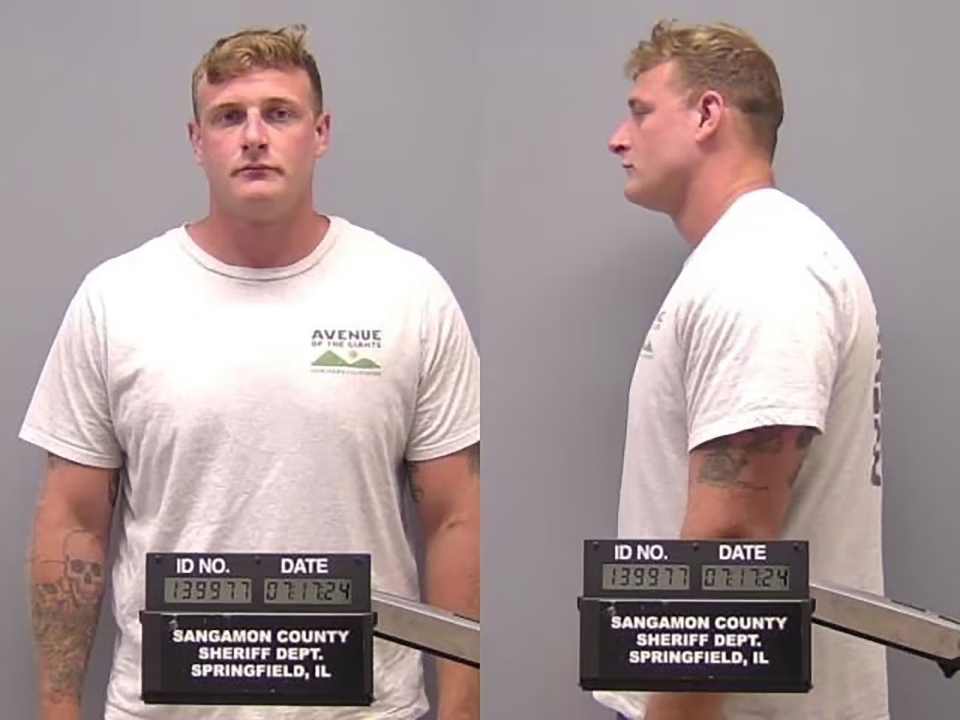
SPRINGFIELD, Ill. (WOWO) — A former Illinois sheriff’s deputy was sentenced Thursday to 20 years in prison for fatally shooting Sonya Massey, a black woman who had called 911 to report a possible prowler outside her Springfield home, a case that sparked national outrage, protests and a federal inquiry into policing practices.
Sean Grayson, 31, was convicted in October of second-degree murder in the July 2024 shooting. Prosecutors said Massey, a 36-year-old single mother, posed no immediate threat when Grayson shot her in the face inside her kitchen. Grayson received the maximum possible sentence and has remained incarcerated since his arrest.
During sentencing, Grayson apologized to Massey’s family, saying he wished he could undo the shooting.
“I made a lot of mistakes that night,” Grayson told the court. “There were points when I should’ve acted, and I didn’t. I froze. I made terrible decisions that night. I’m sorry.”
His attorney asked the judge to impose a six-year sentence, citing Grayson’s late-stage colon cancer, which has spread to his liver and lungs. The request was denied.
Massey’s parents and her two teenage children urged the judge to impose the maximum sentence, telling the court their lives had been permanently altered.
“I cry every day,” Massey’s mother, Donna Massey, said through tears. “I’m afraid to call the police in fear that I might end up like Sonya.”
Sangamon County State’s Attorney John Milhiser said Massey would still be alive if a different deputy had responded to her call for help.
“Sonya Massey’s death rocked her family, but it rocked the community, it rocked the country,” Milhiser said. “We have to do whatever we can to ensure it never happens again.”
When Judge Ryan Cadagin read the sentence, members of Massey’s family reacted with a loud cheer, prompting a brief admonishment from the bench. Outside the courtroom, Massey’s 16-year-old daughter, Summer, said the sentence did not fully reflect the loss her family has endured.
“Twenty years is not enough, but they did what they could do,” she said.
With credit for time already served and possible reductions for good behavior, Grayson could be eligible for release in just under 8½ years.
The night of the shooting
The shooting occurred in the early morning hours of July 6, 2024, after Massey called 911 saying she feared a prowler was outside her home. Body-camera footage later released by Illinois State Police showed Grayson and another deputy, Dawson Farley, searching outside before entering Massey’s house. Farley was not charged.
Inside the home, Massey appeared confused and repeatedly said, “Please, God,” according to video and court testimony. Grayson noticed a pot on the stove and ordered Farley to move it. Instead, Massey picked it up, joking about Grayson backing away from the hot water.
The encounter escalated quickly with Grayson threatening to shoot Massey. Massey said, “I rebuke you in the name of Jesus,” moments before Grayson drew his weapon and ordered her to drop the pot. She briefly set it down and ducked behind a counter, but Grayson fired seconds later.
Grayson was initially charged with three counts of first-degree murder, which could have resulted in a life sentence. A jury instead convicted him of second-degree murder, a charge allowed under Illinois law when a defendant claims an honest but unreasonable belief that deadly force was necessary.
Massey’s family said the verdict was difficult to accept, but welcomed the sentence.
Aftermath and reforms
Massey’s death renewed scrutiny of police shootings involving Black people inside their homes and prompted protests across Illinois and beyond. Civil rights attorney Ben Crump negotiated a $10 million settlement with Sangamon County on behalf of Massey’s family.
The U.S. Department of Justice also launched an inquiry, later resolved after the county agreed to expand de-escalation training and improve data collection on use-of-force incidents. The sheriff who hired Grayson retired amid the fallout.
Illinois lawmakers passed changes requiring greater transparency about the backgrounds of law enforcement candidates, a move Massey’s family has said should be adopted nationwide.
Local station 21Alive reported that the sentencing marked the end of a legal process that, for Massey’s relatives, offered accountability but little closure.
James Wilburn, Massey’s father, said outside court that while he understands the importance of forgiveness, he struggles to reconcile Grayson’s apology with his trial testimony claiming Massey was the aggressor.
“This never should have happened,” Wilburn said. “And we have a long way to go to make sure it doesn’t happen again.”
