

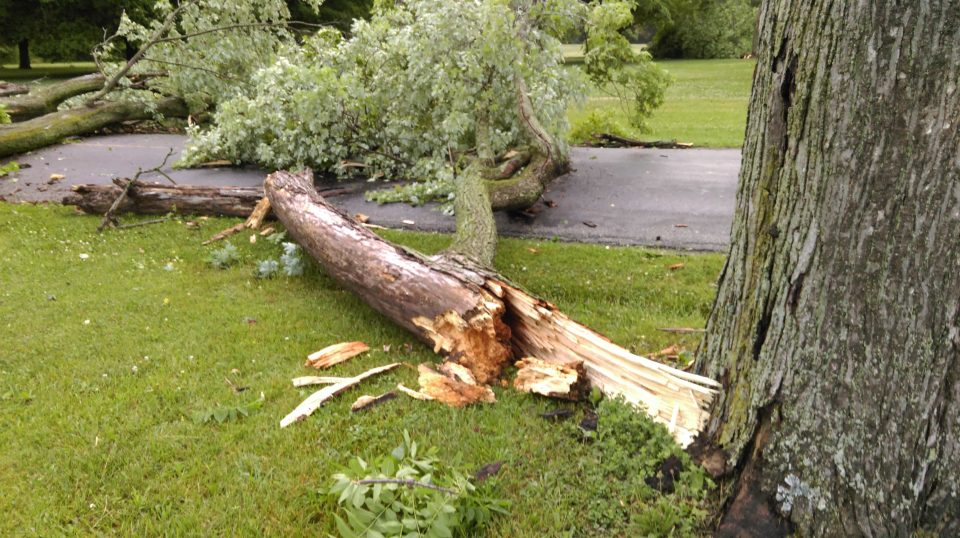
FORT WAYNE, Ind. (WOWO) – After strong winds pelted Fort Wayne and our surrounding WOWO listening area and we saw tornadoes rip through parts of North East Illinois and North West Indiana wind damage is something we are all quite accustom to.
Dealing with the damage can be a daunting process but it is manageable.
Insurance experts and emergency officials say the hours and days after a storm are critical for documenting damage, filing claims and beginning the cleanup process safely.
The first step is making sure everyone is safe and that the property is secure. Officials recommend checking for hazards such as downed power lines, gas leaks and unstable structures before returning to damaged homes.
Once it is safe to enter the area, homeowners should begin documenting the damage as soon as possible. Taking photos and videos of the property, including roofs, siding, vehicles and personal belongings, can help support insurance claims.
Insurance professionals say detailed documentation can speed up the process.
Policyholders are also encouraged to contact their insurance company quickly to start a claim. Many insurers now allow claims to be filed through mobile apps, websites or phone hotlines.
Adjusters typically schedule inspections to assess the extent of the damage and determine what repairs are covered under a homeowner’s policy.
Experts advise homeowners to review their policies carefully. Standard homeowners insurance generally covers wind and tornado damage to structures and belongings, but coverage limits and deductibles can vary. Flood damage caused by rising water, however, is often not included unless the homeowner has a separate flood insurance policy.
In the meantime, homeowners can take steps to prevent further damage while waiting for adjusters. Temporary repairs such as covering broken windows or damaged roofs with tarps are often recommended. Keeping receipts for materials and emergency repairs can help when seeking reimbursement.
Cleanup should also be approached carefully.
Storm debris may include broken glass, nails, damaged wood and other hazards. Emergency officials recommend wearing protective gear such as gloves, boots and eye protection when removing debris.
Large trees or structural damage may require professional crews, particularly if power lines or heavy equipment are involved.
Local governments and relief organizations often set up temporary debris collection sites or provide information about disposal services following major storms.
Officials also warn residents to be cautious of potential scams that sometimes appear after disasters. Homeowners are encouraged to verify contractors, avoid paying large upfront deposits and confirm that workers are licensed and insured.
Recovery after severe weather can take weeks or even months, depending on the extent of the damage.
Emergency management agencies say preparation before storms, including keeping insurance policies updated and maintaining a home inventory, can make the recovery process easier if disaster strikes.
For many communities across the Midwest, where tornadoes and strong winds are a seasonal threat, understanding how to handle insurance claims and cleanup can help residents rebuild more quickly after the storms pass.
