

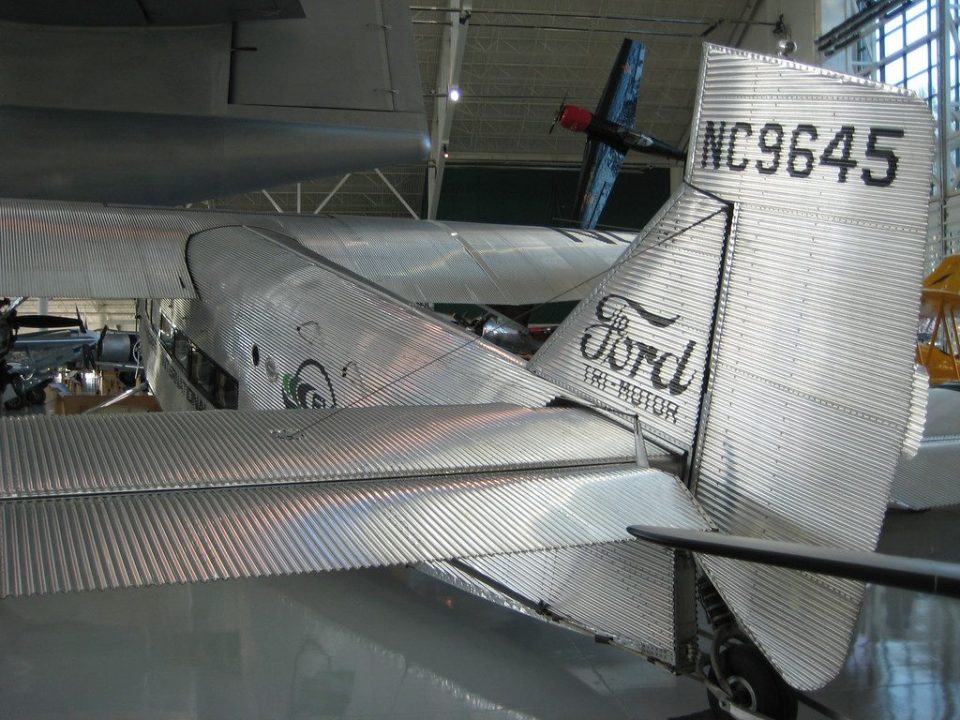
DETROIT, MI (WOWO) Michigan played a critical role in the birth of commercial passenger air travel in the 1920s. Aeronautical engineer William B. Stout designed the Stout 3-AT, America’s first all-metal tri-motor airplane, which became the Ford Tri-Motor with backing from Henry and Edsel Ford of the Ford Motor Company. The aircraft launched one of the nation’s first passenger airline services from Ford Airport in Dearborn, connecting Grand Rapids, Chicago, and Cleveland, according to The Detroit News.
At a time when most aircraft were made of wood and fabric and used mainly for mail or military purposes, the Ford Tri-Motor’s duralumin construction offered both strength and a perception of safety. Stout Air Services operated the passenger flights, providing small but comfortable cabins with curtains, lamps, and basic meal service.
The Tri-Motor’s three engines provided a critical margin of safety, allowing the plane to remain airborne even if one engine failed. Stout and the Fords also promoted public trust through “reliability tours,” flying set routes to demonstrate the aircraft’s dependability.
Following the passage of the 1925 Kelly Act, which allowed private airlines to carry mail, Stout Air Services expanded routes while Ford Air Transportation Service handled company logistics. Although Henry Ford later stepped back from aviation, Stout’s airline operations eventually became part of the United Aircraft and Transportation Corp., a precursor to United Airlines.
“Henry Ford believed so deeply in the airplane industry that he thought that at some point in the future, every person would have an airplane in their garage at home,” said Jamie Myler, research archivist at the Ford Motor Company Archives. The Ford Tri-Motor and Stout Air Services established Michigan as a foundational hub in the development of modern commercial air travel. Reporting and archival research comes from The Detroit News.
