

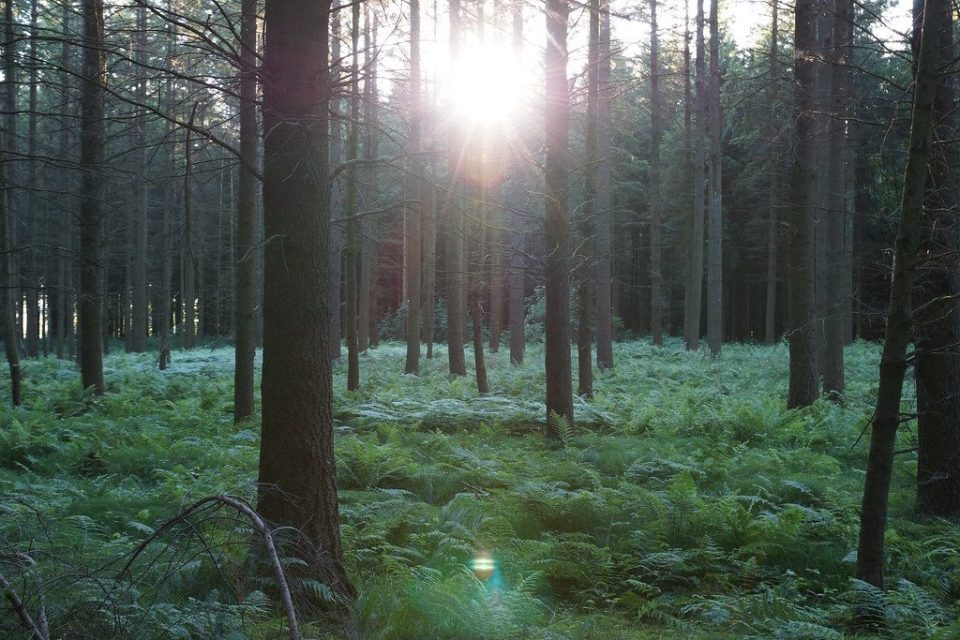
LANSING, Mich. (WOWO) — The future of Michigan’s forests may depend on the survival of some of the smallest trees on the forest floor.
Researchers from Michigan State University are using nearly three decades of seedling data collected in the Manistee National Forest to understand how climate change, deer populations, invasive species and disease could shape the next generation of Michigan forests.
For the past 30 years, scientists have returned each summer to 12 forest plots in western Michigan to track which seedlings emerge, which survive and what environmental conditions influence their growth.
The research shows a changing climate could create advantages for some tree species while making it more difficult for others to regenerate.
Warmer temperatures and shifting weather patterns may benefit trees including red maple, black cherry, red oak and white oak, while species such as sugar maple, American beech, basswood, white ash and black oak could face greater challenges.
Michigan State University forest ecologist Richard Kobe started the long-term seedling research project in the late 1990s. Recent work with postdoctoral researcher Bailey McNichol examined how climate conditions affect the survival of young trees.
Researchers say seedlings provide an important glimpse into the future because the trees growing today may eventually become the mature forests of tomorrow.
“The seedlings that are appearing now are the future big trees,” Kobe said.
Scientists say seedlings are especially important because many tree species rely on young plants already established beneath the forest canopy. When mature trees eventually die, those seedlings can grow into the newly available space.
But researchers tell Bridge Michigan survival is difficult.
McNichol said most seeds that fall to the forest floor never develop into mature seedlings because they are eaten by insects or wildlife, affected by disease or unable to survive changing weather conditions.
Depending on the species, researchers estimate that 90% or more of newly emerged seedlings may not survive their first year.
Even with that high level of loss, Kobe said Michigan forests have shown surprising stability over decades of observation.
“There’s so much turnover happening underneath,” Kobe said, describing the constant cycle of seedlings appearing and dying while forests continue to regenerate.
Researchers say climate change is becoming one of the major forces influencing which trees succeed.
Michigan has experienced rising temperatures, longer dry periods and more intense rainfall events, and different tree species respond differently to those changes.
McNichol said the long-term data indicates warmer conditions could favor several species, including red maple, black cherry, red oak and white oak.
However, researchers caution that warmer temperatures alone will not determine the future of Michigan’s forests.
Oak trees, for example, may be better suited for some future climate conditions, but other challenges could prevent them from reaching maturity.
Deer browsing is one of the biggest concerns.
Researchers found that in areas with high deer populations, 80% to 90% of oak seedlings may be eaten, compared with roughly 10% to 20% in other areas.
Repeated browsing can keep seedlings from growing for years, allowing plants such as ferns — which deer typically avoid — to spread across the forest floor and make it harder for new trees to establish.
Some oak seedlings studied by researchers have remained only knee-high for 15 or 20 years because of repeated deer browsing.
Scientists are also monitoring threats from invasive pests and diseases.
The emerald ash borer has already killed tens of millions of ash trees in Michigan, while other threats include oak wilt, hemlock woolly adelgid and beech bark disease.
Researchers say many of these pests and diseases were introduced from outside Michigan and can dramatically affect individual tree species once established.
Drought is another growing concern.
McNichol said prolonged drought can weaken mature trees by reducing their water reserves and leaving them more vulnerable to insects and disease.
Researchers say the biggest challenge is understanding how all of these pressures interact.
A seedling may be well adapted to future climate conditions but still fail to survive because of deer, disease, competition or changes in the forest environment.
Kobe said Michigan residents have a stake in protecting forest regeneration because forests play a major role in the state’s recreation economy and environment.
Forests provide habitat for wildlife, protect water quality, store carbon and support industries tied to timber and outdoor recreation.
Researchers say landowners can help encourage forest regeneration by protecting young oak seedlings from deer using methods such as tree shelters or fencing.
They also recommend working with the Michigan Department of Natural Resources on conservation practices, including prescribed burns that can reduce dense vegetation and create better conditions for oak growth.
Scientists say the next phase of the research will focus on how climate conditions influence both seedlings and mature trees over time.
Researchers are also studying the role of mycorrhizal fungi, organisms in the soil that form relationships with tree roots, to determine whether those partnerships help certain seedlings survive.
After nearly three decades of tracking some of Michigan’s smallest trees, researchers say the seedlings growing beneath today’s forests could reveal what the state’s landscape will look like for generations to come.
