

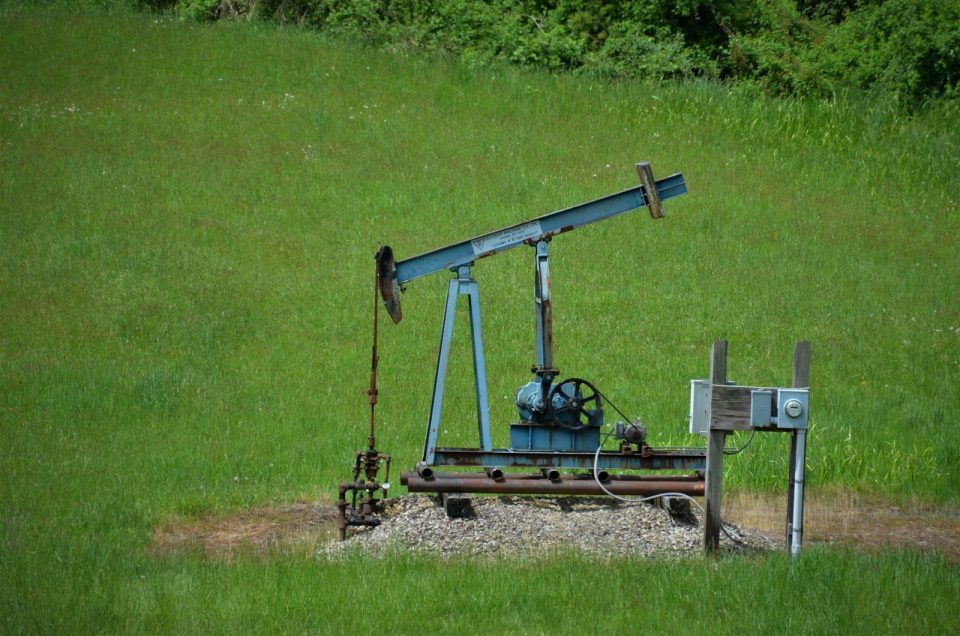
COLUMBUS, OH (WOWO) Ohio House Democrats are proposing a new tax on oil and natural gas production as part of a broader effort to reduce utility costs for residents.
The plan would create a seven percent severance tax based on the market value of oil and gas extracted in the state. Revenue generated from the tax would be used to address environmental concerns, including closing abandoned wells in Appalachian regions, while also providing financial relief to consumers.
According to WCMH, the proposal includes an annual credit of 150 dollars for Ohio utility customers, aimed at offsetting rising energy bills. Supporters say the approach would allow residents, particularly those in areas where extraction takes place, to benefit more directly from the state’s natural resources.
State Representative Dani Isaacsohn said the plan is designed to address long-standing concerns about the impact of resource extraction on local communities. He argued that regions contributing to energy production should see more direct economic returns.
Republican lawmakers have expressed skepticism about the proposal. House Speaker Matt Huffman said taxing the industry could reduce output and ultimately lead to higher costs. He also questioned how the state would administer annual payments to residents.
The proposal reflects a broader push by Democrats to focus on affordability issues ahead of upcoming elections, with additional measures expected to be introduced in the coming weeks, according to WCMH.

2 comments
I’m sorry, but why is this going to be a burden of the tax payers?
We, who didn’t dig the well?
We, who didn’t profit from the well?
We, who didn’t abandon the well?
This should have been set up as a cost for marketing their oil or gas. A portion of the revenue THEY brought in, should have been set aside into a trust, insuring that the industries could pre-pay the closing costs.
This is outrageous that I, or any resident in Ohio, Pennsylvania, or West Virginia (whom never profited) should have to pay to close someone else’s ‘problem’. NOT MY PROBLEM, Ohio.
Find the Owners/Industry and make them pay. They profited, they can pay to close it.
I don’t have the estimated $100 Billion that it’s going to take.
I thought about this a little more, it goes a little like this…
If you Inherited/purchased land with active/inactive wells, you (as an owner) are to subject to assume the debt of the Plugging and Abandonment (P&A).
The State, shall mandate the purchaser/inheritor to pre-pay if the wells are active, by the sale of product. This shall continue until the estimated deposit total is met. ($120,000 /well) This shall be the price of business marketing.
In the event the well is Abandoned, the property owner shall pay to Close the well. This can be done by providing proof that the well is properly Plugged, or Assets (Land) can be reduced to equal the Plugging costs.
If an industry owns, or acquired a company that owns, land with active/inactive wells, they (as an owner) are subject to assume the debt of the P&A.
The State, shall mandate the industrial property owners pre-pay if the wells are active, by the sale of product. This shall continue until the estimated deposit total is met. ($120,000 /well) This shall be the price of business marketing.
In the event the well is Abandoned, the property owner shall pay to Close the well. This can be done by providing proof that the well is properly Plugged, or Assets (Land) can be reduced to equal the Plugging costs.
This sternness should detract those that cannot afford active/inactive well operations.
I refuse to look at this from an Environmental stance, as pumping an industrial well full of cement doesn’t sound like the answer, either. Surely, there has got to be a better way to Close a well that doesn’t cost this much, or more. This is the cost for a Conventional Vertical. Horizontal Unconventional’s can cost $261,000 to $415,000!
I’m not paying for that! But, i would expect to, if i owned/acquired/inherited an active or inactive industrial well.
…which i don’t, so i won’t; nor should we be paying for such acts.
Tax dollars shouldn’t pay to bail out the profiteering aftermath of someone that didn’t share in that wealth.