

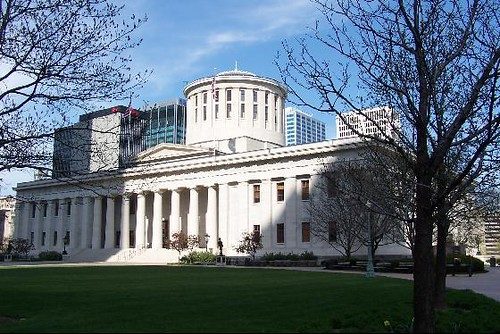
COLUMBUS, Ohio (WOWO) — Ohio lawmakers are proposing new statewide standards for foster care placement rates as counties struggle with rapidly increasing costs and warn that the current system could push some local governments toward a financial breaking point.
House Bill 984, introduced by state Reps. Justin Pizzulli, R-Scioto County, and Darnell Brewer, D-Cleveland, would require the Ohio Department of Children and Youth to establish reasonable, standardized rates for what counties pay to place children in foster care.
The lawmakers say the goal is to give counties greater predictability over one of their most difficult expenses while ensuring children continue to receive appropriate care.
Brewer said more than 14,000 Ohio children were in foster care in 2025, while the cost of foster services has increased 68% since 2020, even though the number of children in the system has declined.
The issue has become particularly visible in Vinton County, where the placement of 16 children from the Siders family case created an enormous financial burden for the county. The state ultimately provided $1 million in assistance to help cover the costs.
Pizzulli said lawmakers should not wait for another county to reach that point.
“I don’t want to wait for another county to reach a breaking point,” Pizzulli said. “We have to make sure every child has a safe place to go, we have to make sure the system is there for tomorrow and we have an obligation to protect these children and we have an obligation to make sure the system that we build to protect them is financially sustainable for the future.”
Under the current system, counties are responsible for paying foster care placement costs, but local officials say they have limited ability to understand or control how those rates are established.
Tammy Moore Morton, director of Scioto County Job and Family Services, said providers can increase rates based on factors such as a child’s acute needs or previous behavior while in foster care according to WCMH.
That can leave county children’s services agencies facing difficult decisions when the cost of a placement rises substantially.
“Where the system breaks down is when we inevitably face whether we can afford to do what is in the best interests of the child,” Morton said. “And while that should never be a question any children’s service agency has to ask, it is sadly something we have to consider in the current system.”
Scioto County Commissioner Scottie Powell said counties facing higher placement costs have limited options.
Some may have to reduce other services, increase reliance on property tax revenue or potentially take fewer children into foster care, he said.
Powell warned that while smaller counties may be experiencing the pressure first, the problem could eventually affect communities across Ohio.
“Rates can and will go up because there are no guardrails to prevent it,” Powell said.
House Bill 984 would attempt to create those guardrails without restricting providers from receiving additional compensation when children require specialized or more intensive care.
The proposed rate-setting process would involve both county children’s services agencies and foster care providers.
Brewer said the legislation is not intended to create conflict between counties and the organizations responsible for caring for children.
“This is not a matter of counties vs providers,” Brewer said. “Our providers are essential for protecting Ohio’s children. We are trying to create reasonable guardrails, not barriers to appropriate care.”
Pizzulli acknowledged that foster care providers are facing many of the same economic pressures affecting other employers, including staffing shortages, higher wages and increasing operating expenses.
But he said there also needs to be transparency when taxpayers are ultimately responsible for covering the costs.
“If taxpayers are ultimately responsible for paying these bills then there needs to be a rationale and a transparent process for determining what those bills should look like,” Pizzulli said.
The proposal comes after the Department of Children and Youth has already been examining the possibility of establishing a statewide foster care rate structure.
DCY legislative director Bryan Stout told lawmakers last month that the department had encountered difficulties developing a statewide rate card, in part because foster care providers had not provided enough useful data.
Stout suggested the state could potentially require greater transparency from providers if voluntary reporting does not produce enough information, including potentially using licensing requirements or state payments as leverage.
That question of data and transparency is central to the proposed legislation because lawmakers want the state to establish rates that reflect the actual cost of providing foster care while preventing counties from being exposed to unpredictable increases.
The legislation does not seek to eliminate higher-cost placements when a child’s circumstances require additional services. Instead, its sponsors say the goal is to create a more consistent process for determining what counties should pay.
For counties, the issue is ultimately about whether they can continue financing foster placements without sacrificing other local services.
For providers, the challenge is maintaining enough staff and resources to care for children with increasingly complex needs.
And for lawmakers, the debate centers on how to balance those competing financial pressures without allowing the cost of care to interfere with a child’s need for a safe placement.
House Bill 984 now moves into the legislative process as Ohio officials continue confronting the rising cost of its foster care system.
