

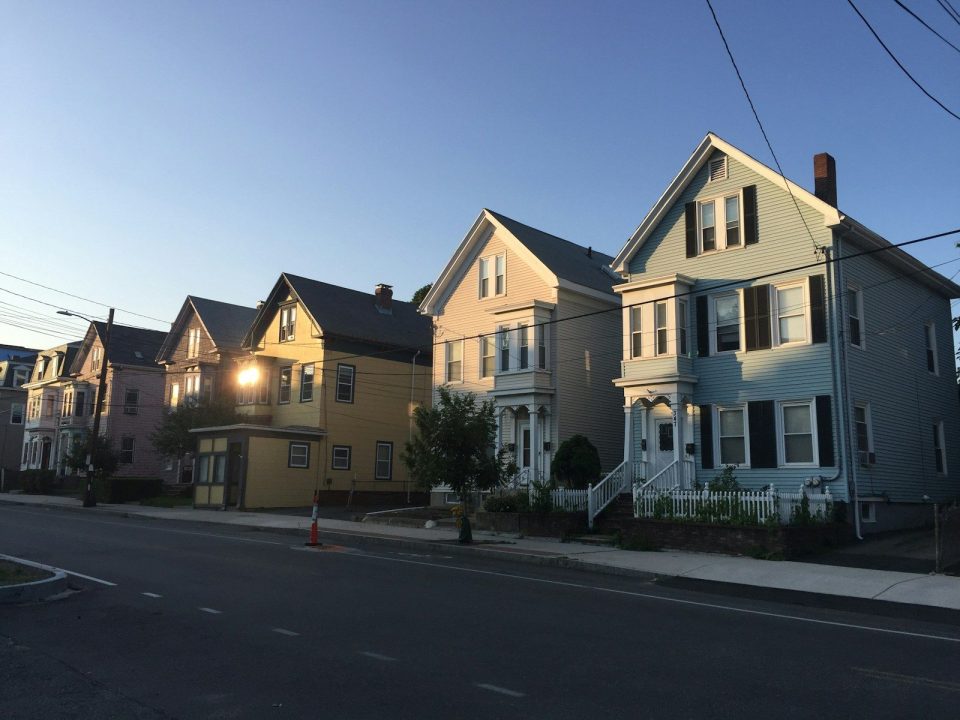
LANSING, Mich. (WOWO) — Michigan’s housing shortage is being compounded by another challenge: much of the state’s existing housing stock is decades old and increasingly in need of expensive repairs.
About 60% of occupied homes in Michigan — roughly 2.5 million houses and apartments — were built in or before the 1970s, according to data cited by Bridge Michigan. The median Michigan home is 53 years old, eight years older than the national median of 45.
Housing experts say the age of the state’s homes could become an increasingly important issue as Michigan works to increase its supply of affordable housing.
Dawn Crandall of the Home Builders Association of Michigan called the state’s aging housing stock “a huge problem” that officials will have to contend with in the coming years.
With older homes come potentially significant maintenance and renovation costs.
“Do people want to walk in and then invest that kind of money to remodel a home?” Crandall said. “To buy an older home is not necessarily cheap.”
Potential problems range from aging water heaters, roofs and foundations to hazards that can be associated with much older houses, including asbestos, lead-based paint and outdated knob-and-tube electrical wiring.
Those costs can be especially challenging for people buying their first home. The National Association of Realtors says the median age of a first-time homebuyer reached 40 last year, the highest level recorded.
Michigan’s median housing age of 53 years is older than the national figure, although the state is comparable with other Midwestern states such as Ohio and Illinois. Housing tends to be newer in the Sun Belt and older in the Northeast.
David Allen, who manages the Office of Market Research at the Michigan State Housing Development Authority, described the state’s aging housing stock as a “reasonably serious” issue.
“It’s important to make sure that those homes are still available for use,” Allen said, while noting that many older homes are “nowhere near functionally obsolete.”
The age of Michigan’s housing stock is partly tied to the state’s history of limited home construction following the Great Recession.
Home Builders Association of Michigan data shows developers obtained permits for about 54,000 single-family homes in 2005. By 2009, that number had plunged to roughly 6,900.
Crandall attributed the sharp decline to the recession and to builders leaving Michigan for work in the South following Hurricane Katrina in 2005.
“That kinda was like our personal Katrina” for Michigan’s housing industry, Crandall said, adding that builders went south to help with reconstruction and “none of them came back” because of Michigan’s stagnant economy during the recession.
The slowdown in construction meant fewer newer homes were added to the state’s housing supply.
A report from Harvard University’s Joint Center for Housing Studies similarly identified a prolonged period of underbuilding during the Great Recession as a national factor in today’s housing shortage.
The Harvard report also found that one in four homeowners nationwide lives in a home built before 1960. Many owners of those older properties face higher maintenance and repair costs than homeowners living in houses built between 2010 and 2023.
Michigan has programs intended to help preserve and repair existing housing.
The state offers tax credits for certain historic homes, although many older properties do not qualify. Other programs assist first-time buyers and homeowners with repairs, including efforts to improve energy efficiency through projects such as replacing windows, furnaces and roofs.
Michigan is also trying to increase the number of new homes being built.
The state adopted its first statewide housing plan in 2022, when officials estimated Michigan had a shortage of about 190,000 housing units.
The Michigan State Housing Development Authority now estimates the shortage at roughly 97,000 homes.
State officials and Gov. Gretchen Whitmer’s administration have pursued measures intended to speed up housing construction, including changes to some building regulations and a new state-level tax credit.
Some regulatory changes have become law, but a broader effort to change zoning requirements has stalled amid opposition from some local governments.
The issue is expected to remain part of Michigan’s housing debate as the state prepares for its next gubernatorial election.
Republican John James and Democrat Jocelyn Benson have both discussed housing affordability, although their statements provided to Bridge Michigan took different approaches to the issue.
James said Michigan’s aging housing stock demonstrates the need to make new-home construction easier and less expensive.
“By cutting unnecessary regulations and lowering the cost of construction, we can increase housing supply and begin replacing aging homes and infrastructure across our state,” James said.
Benson said her approach would include efforts to make housing construction faster while also investing in existing homes.
She cited streamlining permits, upgrading aging water infrastructure and helping homeowners with weatherization as ways to reduce costs and allow residents to remain in their homes.
Benson also has proposed measures addressing down-payment assistance, short-term rentals and purchases of Michigan homes by large investment firms.
Crandall said whoever becomes Michigan’s next governor will need to demonstrate a willingness to work across party lines if the state hopes to make significant progress on its housing shortage.
For Michigan communities, the challenge extends beyond simply building more homes.
The state must also contend with millions of existing properties that are reaching an age when major repairs and replacements become increasingly necessary.
As Michigan works to close its housing gap, the condition and affordability of those older homes could become just as important as the number of new houses being built.
