

INDIANAPOLIS (WOWO) — Doctors now have another tool to help evaluate people experiencing cognitive decline, after the U.S. Food and Drug Administration cleared a new blood test designed to identify biological signs associated with Alzheimer’s disease.
Roche Diagnostics and Eli Lilly announced Monday that the FDA cleared the Elecsys Phospho-Tau (217P) Plasma, or pTau217, blood test for use in people 55 and older who have signs, symptoms or complaints of cognitive decline. The test measures phosphorylated tau 217, a biomarker associated with the amyloid pathology that is a hallmark of Alzheimer’s disease.
The companies say the test is the first and only FDA-cleared single-biomarker blood test designed to support both a “rule-in” and “rule-out” assessment of Alzheimer’s-associated amyloid pathology across primary and specialty care settings. Results are reported as positive, intermediate or negative and are intended to help clinicians determine what additional evaluation may be appropriate.
The clearance does not mean a blood test alone can diagnose Alzheimer’s disease.
Roche says Elecsys pTau217 must be interpreted alongside a patient’s clinical history, symptoms and other relevant findings. An intermediate result is considered indeterminate for amyloid pathology and may lead to additional testing, while a negative result indicates a low likelihood of the amyloid pathology being assessed by the test.
That distinction is important because the test is designed to aid the diagnostic process rather than replace a complete medical evaluation.
For patients and families, the biggest potential change could be how easily doctors can begin that evaluation.
Existing methods for assessing amyloid pathology include positron emission tomography, or PET, imaging and cerebrospinal fluid testing. Those approaches can be expensive, invasive or difficult to access, particularly outside specialized medical centers, according to Roche.
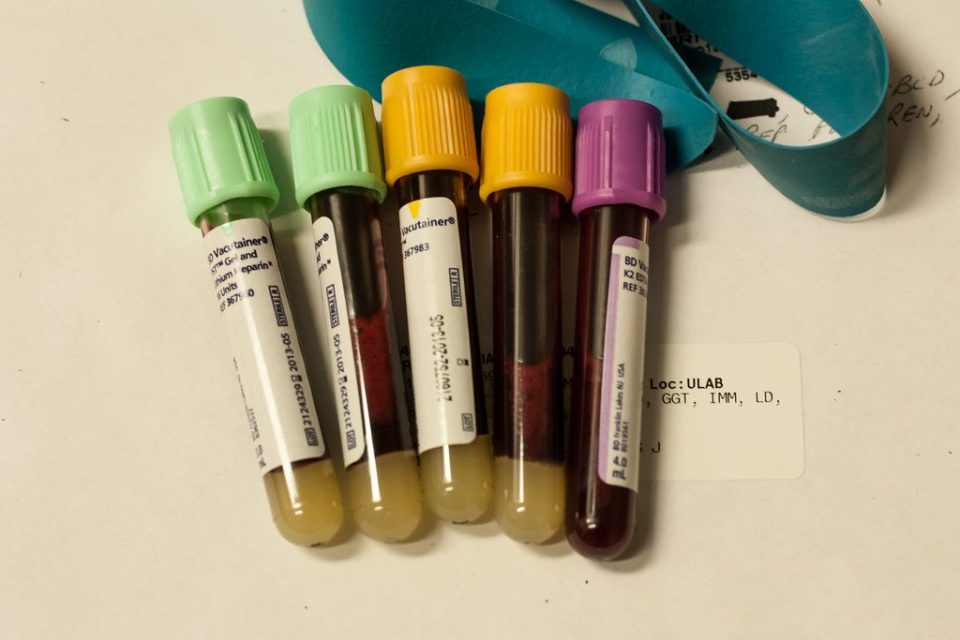
The new test uses a routine blood sample, potentially making biomarker testing more accessible in primary-care offices and other settings where patients initially seek help for memory problems.
Roche said the test is designed to work on more than 4,500 of its cobas laboratory instruments already installed in U.S. clinical laboratories. Labcorp and Quest Diagnostics have also announced plans to make the test available through their laboratory networks, according to Reuters.
The availability of a blood-based test comes as earlier identification of Alzheimer’s disease becomes increasingly important.
Newer treatments are aimed at slowing the progression of the disease rather than reversing existing damage, making the timing of diagnosis an increasingly important part of the treatment discussion. A more accessible way to identify Alzheimer’s-related pathology could help doctors determine sooner which patients may need additional testing, specialist evaluation or consideration for treatment.
Roche says an estimated 75% of people living with dementia remain undiagnosed, while patients who do receive a diagnosis can face lengthy periods of uncertainty after symptoms begin.
“For millions of families navigating the uncertainty of Alzheimer’s disease, a timely diagnosis is the first and most critical step toward meaningful care,” said Carole Ho, M.D., executive vice president and president of Lilly Neuroscience.
Ho said the Roche-Lilly collaboration was intended to bring blood-based testing into both primary and specialty care, helping reduce the gap between the emergence of symptoms and a definitive evaluation. Roche Diagnostics North America President and CEO Dan Malarek called the FDA clearance an important milestone, saying the test could help bring Alzheimer’s evaluation closer to patients and give clinicians more information when deciding the next step in care.
An Indiana connection also figures into the rollout.
Jared R. Brosch, M.D., a neurologist with Indiana University Health, said advances in blood-based biomarkers could change how clinicians evaluate patients with cognitive impairment.
“For decades, clinicians have faced significant challenges in accurately diagnosing Alzheimer’s disease in its early stages,” Brosch said, noting that PET imaging and cerebrospinal fluid biomarkers can confirm amyloid pathology but may be costly, invasive or difficult to access.
He said blood-based tools could allow doctors to evaluate more patients earlier in the disease process, potentially improving diagnostic confidence and helping patients and families make more informed decisions.
The test itself is based on pTau217, a form of phosphorylated tau protein. Measuring that biomarker provides information about amyloid pathology associated with Alzheimer’s, but the result still has to be considered in the broader clinical picture.
Roche’s product information says a positive result indicates a high likelihood of amyloid pathology, while an intermediate result warrants consideration of further testing. A negative result indicates a low likelihood of the amyloid pathology being assessed, although doctors may investigate other potential causes of cognitive decline.
Roche previously received a CE Mark in Europe for the pTau217 test in May, describing it as a minimally invasive alternative to conventional methods of assessing Alzheimer’s-related pathology.
The FDA clearance marks the latest step in a broader shift toward blood-based biomarkers as researchers and clinicians look for faster and more accessible ways to identify Alzheimer’s disease.
For now, the test is intended for people age 55 and older who are already showing signs, symptoms or complaints of cognitive decline. It is not intended to predict whether a healthy person will eventually develop dementia, to diagnose other neurological conditions or to monitor the effectiveness of a treatment.
The practical takeaway for patients is straightforward: the new test may make one part of an Alzheimer’s evaluation easier, but a blood draw is not a substitute for a medical diagnosis.
Instead, the FDA-cleared test gives doctors another piece of evidence — one that could be obtained through a less invasive and potentially more widely available laboratory test — when determining whether a patient’s cognitive symptoms may be related to Alzheimer’s disease and what should happen next.
