

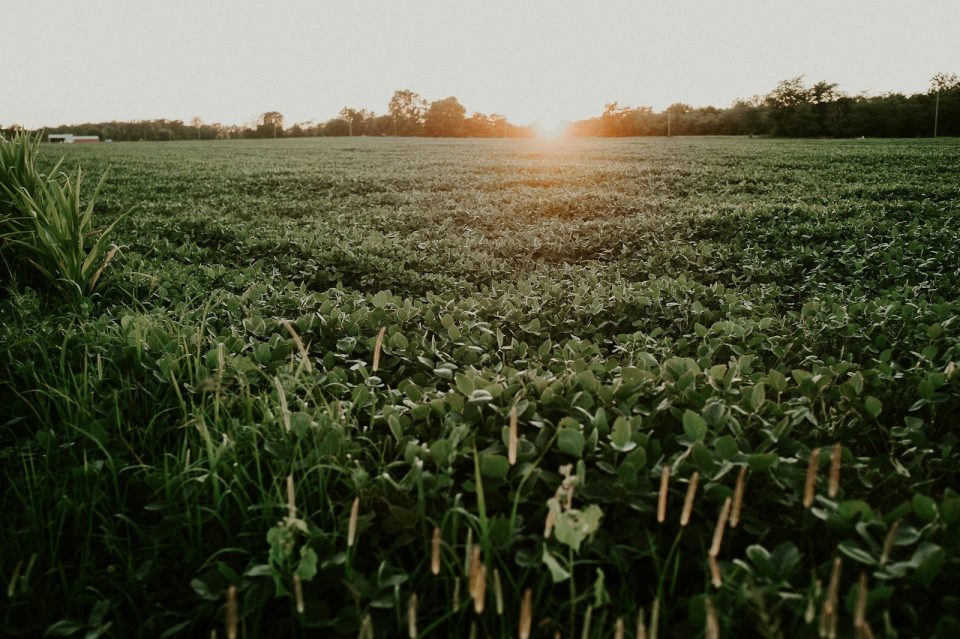
EAST JORDAN, Mich. (WOWO) — Michigan’s farmland is under growing pressure from rising property values, development and a shortage of younger farmers willing to take over family operations, but some farmers are finding new ways to keep agricultural land from being converted to other uses.
The number of acres devoted to farming in Michigan has declined in recent years, while the amount of farmland protected through conservation programs has increased.
The issue is particularly important as a large amount of farmland nationwide is expected to change hands over the coming decades, forcing farmers and landowners to make decisions about whether agricultural property will remain in production, be sold or eventually be developed.
For John Boyer of East Jordan, protecting farmland is personal according to Bridge Michigan.
Boyer grew up on his family’s 131 acres of rolling fields planted with corn, oats and wheat. The property changed hands outside the family several times before Boyer eventually bought it back.
He said he felt an obligation to return to farming the property in part because he wanted to keep development from moving into the surrounding agricultural community.
“For any farmer, everything’s personal,” Boyer said. “Every piece of property, every stone you pick up, you spend countless hours out there.”
This year, Boyer took another step to protect the property by placing 130 acres into a conservation easement.
The arrangement allows Boyer to continue owning and farming the land, but restricts future development.
Under the easement, Boyer sold the future development rights to the Little Traverse Conservancy. Those rights remain with the conservancy even if Boyer eventually sells the property or passes it along to his children.
That can prevent the land from being divided into smaller parcels and converted to homes or commercial development.
Boyer said he wants to prevent future owners from splitting the property apart and selling pieces simply to make money.
“Then suddenly a productive farm field or ground is gone, and it’s gone for generations,” Boyer said. “It’s gone forever.”
The pressure to preserve farmland is growing as Michigan loses agricultural acreage.
According to the most recent U.S. Department of Agriculture farm census, Michigan had approximately 9.5 million acres devoted to farming in 2022, or about one-quarter of the state.
That was down from roughly 9.8 million acres in 2017, a decline of about 3%.
Farmland owned by farmers dropped by about 208,000 acres, or 3.6%, during that period. Leased and rented farmland also declined by a similar percentage.
At the same time, the value of farmland has been moving in the opposite direction.
Michigan farmland was valued at about $6,800 per acre in 2025, according to USDA data. That’s a 7.8% increase from 2024 and a larger increase than the 4.3% national average.
Higher land values can be a benefit for farmers who already own significant acreage, but they can make it considerably more difficult for beginning farmers or expanding operations to acquire property.
Jon LaPorte, a farm business management educator with Michigan State University Extension, said farmers and landowners are facing difficult decisions about how to handle valuable property.
“It’s a matter of trying to figure out what exactly is going to be the best fit for everybody’s situation,” LaPorte said. “And there’s a lot of pressure. There’s a lot of money.”
For some landowners, selling development rights through a conservation easement provides an alternative to selling the entire property.
Joe Graham, chief financial and operating officer for the Little Traverse Conservancy, said farmland is often a farmer’s largest asset and can represent an important source of retirement income or money for a child’s education.
The conservancy’s easement program offers another way for owners to access some of that value while retaining ownership.
“We’re offering them another alternative,” Graham said. “We’re offering a way to capture some of the equity and the value they have in that land without having to sell it and see it leave their ownership.”
The Little Traverse Conservancy has protected about 30,000 acres through conservation easements across five counties in northern Michigan and the Upper Peninsula. About 6,000 of those acres are farmland.
Graham said interest in conservation easements is growing in some small farming communities.
But the decision is not necessarily an easy one.
Because development rights are restricted, conservation organizations generally pay less for an easement than the property’s full development potential would be worth.
That difference can become especially significant as rural land values rise.
“There can be a question of timing,” Graham said. “‘Is this the right thing to do? What might we be foregoing later?'”
For Boyer, the long-term benefit outweighs that concern.
He wants the land to remain a working farm rather than becoming a collection of residential parcels.
The challenge facing Michigan agriculture extends beyond development.
Farmers are also dealing with changing weather patterns, crop diseases, temperature swings and increasingly expensive inputs.
Dave Skornia, a farmer in Boyne City, said northern Michigan could become increasingly valuable for agriculture as the climate changes in other parts of the country.
“As the world climate changes, this area could become more and more important,” Skornia said. “So, you got to have land.”
Another way farmers are keeping land in production without buying it is through long-term leases.
Rebecca Carlson, a fourth-generation farmer who operates Overlook Orchards in Northport, has expanded her family’s agricultural operation from about 200 acres to roughly 1,300 acres over eight years with her husband.
The couple owns some of the land and leases additional acreage, much of it from multigenerational farm families who no longer have a younger generation ready to take over.
Carlson said leasing allows farmers to expand without assuming the full cost of purchasing additional land.
Her leases are generally for about 30 years, with annual payments varying based on factors such as location and crop productivity.
Leasing can also reduce some expenses associated with ownership, including property taxes and certain infrastructure costs.
“It’s a great way to maintain your farming, your farm and grow your farm,” Carlson said. “They don’t make land anymore.”
About 39% of Michigan’s agricultural land was leased in 2022, according to the USDA census. That share was unchanged from 2017.
But finding the right lease can be difficult.
A 2026 Michigan State University survey of farmers found that high rental rates and finding land that matches a farmer’s needs were among the leading concerns for those seeking leased acreage.
LaPorte said farmers often find themselves with one half of the equation but not the other.
“Farmers either have a crop in mind but no ground, or they had the ground but in some cases they weren’t sure what they could raise on it,” LaPorte said.
The relationship between a landowner and a farmer can also determine whether a lease becomes a stable, long-term arrangement.
“You might have a great relationship where you never worry a single day about whether or not you’re going to have the property a year from now,” LaPorte said.
In other situations, differences over how the land should be managed or what each party wants from the agreement can create uncertainty.
Rising land prices are another piece of the puzzle.
Harold Halderman, president and CEO of Halderman Companies, a farm real estate and management firm operating primarily in Indiana, Michigan and Ohio, said farmland values across the Midwest have remained steady or increased even as farm income has declined nationally.
Demand from residential and industrial development is one factor supporting those values.
Tax-deferred exchanges are another. They allow landowners who sell appreciated property to defer capital gains taxes when they reinvest proceeds into other real estate.
“That’s where a lot of your farmland value gets support,” Halderman said. “Are there other buyers out there that keep a floor under it?”
For farmers trying to purchase land, high prices can make expansion more difficult.
For farmers who already own substantial acreage, however, rising property values can increase the value of their assets.
Renewable energy development has added another potential use for farmland.
As Michigan works to expand renewable energy, agricultural land can attract proposals for solar installations, wind turbines and battery storage facilities.
LaPorte said landowners facing financial pressures may view those projects as another potential source of long-term income.
“From a landowner’s perspective, they’ve got bills to pay the same as a farmer, and they’re looking at situations of, ‘Where can I get the most value?'” LaPorte said.
Solar development currently occupies a relatively small share of Michigan’s prime farmland.
According to the Solar Energy Industries Association, solar accounts for about 0.09% of USDA-designated prime farmland in Michigan, less than the amount of acreage converted to suburban development or recreational uses such as golf courses.
Even so, proposed renewable energy projects have generated strong opposition in some farming communities.
In Wexford County, early plans for a solar development covering nearly 1,500 acres of farmland prompted concerns about the loss of productive agricultural ground and the long-term effects on the land.
Carlson views solar development as another potential threat to farmland, particularly in agricultural areas such as Leelanau County.
She said renewable energy infrastructure should be placed in locations where it does not compete directly with land needed to grow food.
“Put them in places that make sense,” Carlson said. “Don’t take away our resources to grow our own food.”
For Michigan farmers, the challenge is increasingly about more than simply producing crops.
They are deciding how to keep land in agriculture while navigating high property values, changing weather, development pressure, expensive equipment and supplies, and a generation of potential successors that may be smaller than previous generations.
Conservation easements, long-term leases and other preservation strategies offer farmers and landowners alternatives to selling farmland outright.
But with agricultural acreage continuing to decline and land values rising, the decisions being made now could determine which Michigan fields remain in production for generations to come.
