

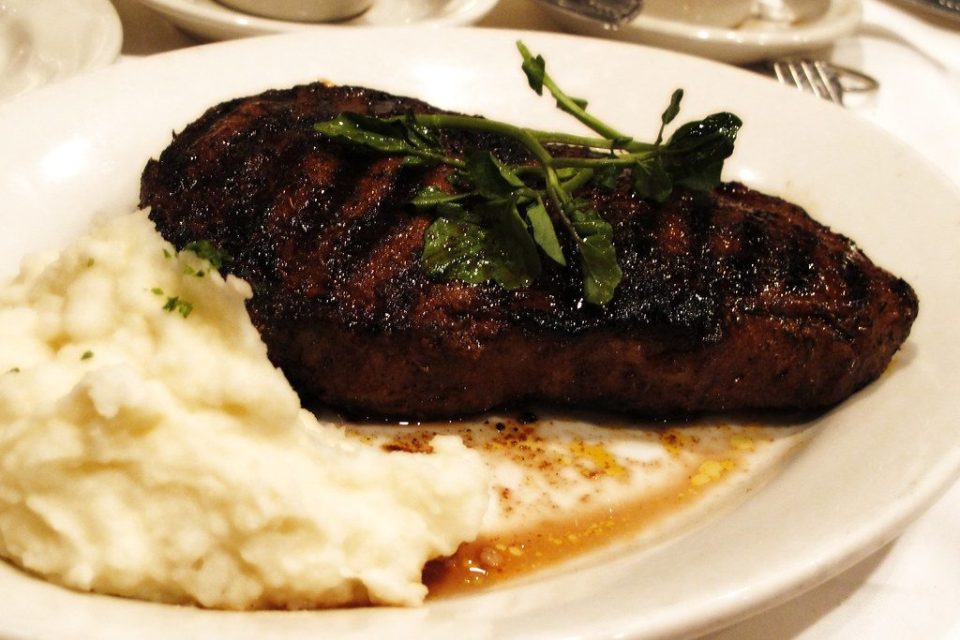
NEW YORK (WOWO) — Ordering an expensive steak at a restaurant doesn’t always mean you’re getting the cut you think you’re paying for. Meat experts say knowing a few differences between popular steaks — and asking the right questions — can help diners avoid an expensive mix-up.
The issue recently drew attention after an Illinois man went viral for accusing Texas Roadhouse of serving him a less expensive sirloin instead of filet mignon on three separate visits. The restaurant confirmed one incident and said management corrected the mistake.
The controversy also raised a basic question: Would most customers recognize the difference?
Katie Flannery, a third-generation butcher at California-based Flannery Beef, identifies filet mignon, rib-eye and New York strip as the three major steakhouse choices.
Filet mignon is prized for tenderness. It comes from a muscle that gets relatively little use, making it naturally tender. But it generally has less beefy flavor than other cuts and commands a higher price because relatively little is available from each animal.
For diners who want a stronger beef flavor, Flannery recommends rib-eye. It has more fat and a combination of textures, including a tender center and a more substantial outer section.
New York strip offers a heartier texture and is recognizable by the band of fat along one side. It generally has less flavor than rib-eye and can require more chewing than filet, depending on the grade.
A porterhouse offers two cuts in one: New York strip and filet mignon, separated by a bone. It’s often large enough to share.
One menu description that can cause confusion is “sirloin filet.” That doesn’t mean filet mignon. It’s sirloin cut and shaped to resemble filet. Because sirloin comes from a more heavily used area near the hip and rump, it typically isn’t as tender.
The USDA grading system can provide another clue about what diners are buying. The main grades are Prime, Choice and Select, based largely on marbling — the small flecks of fat within the muscle.
Prime is the highest grade and generally has more marbling than Choice or Select. Flannery estimates about 10% of graded cattle qualify for Prime, while roughly 70% receive Choice.
All three grades can include filet, rib-eye, New York strip and sirloin. The USDA grades the beef carcass, meaning cuts from the same carcass carry the same grade. Grading is voluntary, so some beef is not graded at all.
More marbling can contribute to flavor and tenderness, but it isn’t the only factor. Flannery says the amount of work a muscle does during an animal’s lifetime also affects how tough the meat will be.
Aging is another term diners may encounter. Both wet-aging and dry-aging can improve tenderness, but dry-aging also concentrates the beef’s flavor.
Wet-aging is common in the restaurant industry. The beef is vacuum-sealed and refrigerated while it ages. Dry-aging exposes the meat to air in a temperature-controlled cooler, which causes moisture loss and concentrates flavor.
Recognizing the actual cut can be difficult once a steak is cooked, sliced or covered in sauce. But there are some visual clues.
Flannery says filet generally has finer muscle fibers, while sirloin has a more visible grain. However, a rounded baseball-cut sirloin can look remarkably similar to filet mignon.
John Tesar, executive chef of Palladino’s Steak & Seafood in New York City and Dallas, says a filet is typically thick and round. A rib-eye has a distinctive outer section known as the rib cap, or spinalis.
Chef Luis Haro, vice president of culinary innovation at Logan’s Roadhouse, says identifying a steak is easier when it’s served whole because diners can examine its shape.
If the menu description isn’t clear, experts recommend asking the server exactly what cut is being served and what to expect.
And if the steak arriving at the table doesn’t look right, Tesar suggests starting with a polite question: “I thought this was a certain steak, and I am not familiar with the way you are presenting it. Can you explain that to me?”
If the server can’t provide a clear answer, diners can ask to speak with the chef or manager.
The experts’ bottom line: Understand the cut, pay attention to menu descriptions and don’t be afraid to ask questions before paying steakhouse prices.
