

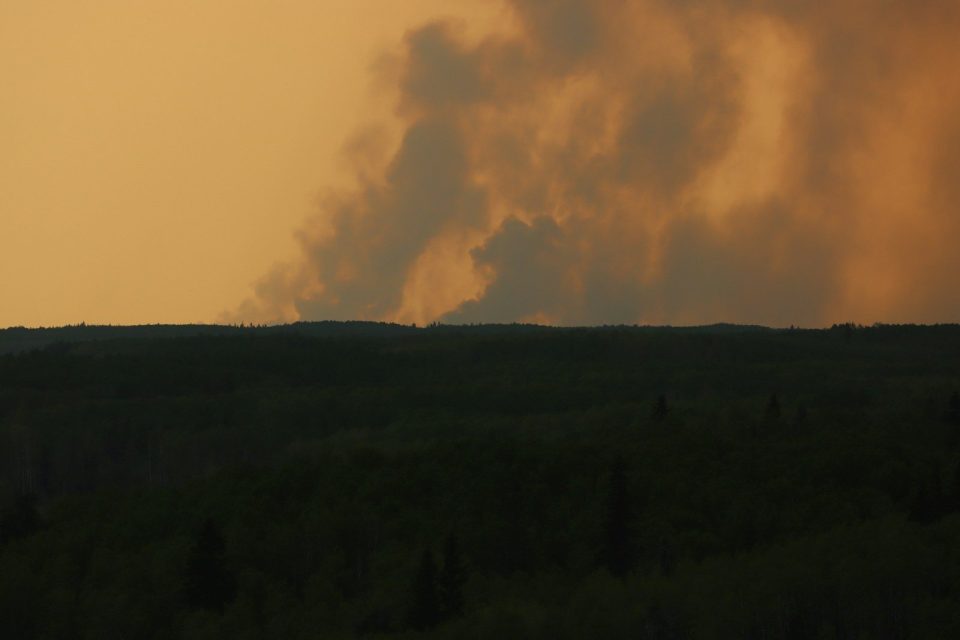
LANSING, Mich. (WOWO) — The thick wildfire smoke that blanketed Michigan skies and triggered widespread air quality alerts earlier this year carried a major economic price tag, according to a new analysis from an economic research group.
The Anderson Economic Group estimates Michigan suffered more than $4 billion in economic losses because of smoke from Canadian wildfires that disrupted daily life, businesses and outdoor activities across the state.
Economists say the figure could continue to rise as additional impacts are calculated according to News10 Lansing.
The report examined losses across multiple sectors, including agriculture, tourism, manufacturing, transportation and retail. Researchers say the disruption came after days of unhealthy air conditions forced people indoors and led to cancellations and delays across the state.
Patrick Anderson of Anderson Economic Group said the scale of the smoke event stood out compared with previous experiences.
“Agriculture, tourism, even manufacturing, transport, retail — and if you all of a sudden tell people, you can’t go outside for four days, it’s going to cost you something,” Anderson said.
“I can’t remember a sustained number of days where it was that bad in Michigan. So yeah, when we started to see that we said, there is going to be a consequence of this,” he added.
Michigan was not alone in experiencing economic damage from the wildfire smoke.
The Anderson Economic Group estimates:
- Michigan: More than $4 billion in losses
- New York: About $5 billion in losses
- Wisconsin: Approximately $2 billion in losses
The analysis found the effects extended beyond businesses directly impacted by outdoor conditions.
Manufacturers, transportation companies, retailers and tourism operators all experienced disruptions as residents changed plans and outdoor activity declined.
The poor air quality also forced organizers to delay or postpone community events.
In the Lansing area, several gatherings were affected, including events such as the Dam Jam and ’80s Night in East Lansing.
Steve Japinga with the Lansing Regional Chamber of Commerce said the disruption was noticeable for businesses and residents who rely on community events.
“The Dam Jam, ’80s night in East Lansing, some of these really cool opportunities to get together, celebrate, whatever it might be,” Japinga said.
Japinga said many events are expected to return through rescheduled dates and encouraged residents to watch for updated announcements.
Describing the unusual conditions, Japinga said the smoke created an atmosphere unlike anything many residents had experienced.
“I mean, I felt like I was on the set of Dune. It was crazy here,” Japinga said. “It definitely impact us. It’s going to continue it seems like.”
Anderson said the $4 billion estimate represents only direct economic losses and does not include all potential long-term consequences.
“The $4 billion, probably growing, is just direct income loss. You also have health losses. And we’re assuming at this point that we haven’t affected our reputation, but if that starts to happen, that number compounds,” Anderson said.
Economists say wildfire smoke events could become a larger economic concern if wildfire activity continues to increase.
Anderson said the issue requires broader wildfire management efforts in both the United States and Canada to reduce future impacts.
Canadian wildfire activity continues to affect air quality across parts of North America. More than 830 wildfires were reported to be burning in Canada as crews from multiple regions worked to contain them.
Health officials recommend residents monitor local air conditions through the National Weather Service’s Air Quality Index and limit outdoor exposure when smoke levels become unhealthy.
Economists say the Michigan losses provide another example of how climate-related events can create widespread economic consequences far beyond the areas where fires are actively burning.
