

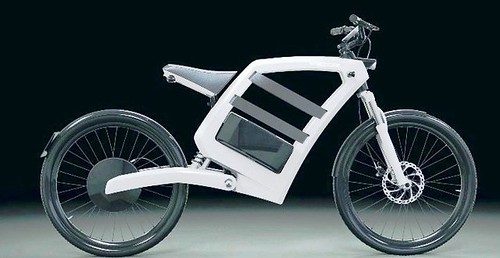
NEW YORK (WOWO) — A growing number of serious injuries and deaths involving children riding e-bikes and other motorized two-wheelers are prompting officials around the country to consider tougher restrictions — including criminal charges against parents who allow their children to ride illegally.
The debate is unfolding as communities struggle with a patchwork of rules governing e-bikes, e-motorcycles and electric scooters, while cycling advocates warn that broad restrictions could unfairly target lower-powered bicycles that have been used safely for years.
The Associated Press reports one of the most aggressive approaches is underway in Southern California, where the Orange County District Attorney’s Office has opened more than two dozen investigations involving parents of children accused of illegally riding e-bikes or e-motorcycles.
Prosecutors have already filed charges against four parents.
In one case, the mother of a 14-year-old boy is accused of allowing him to ride an e-motorcycle before he struck and killed an elderly pedestrian.
Another parent, Richard Eyssallenne, pleaded not guilty to child endangerment charges after prosecutors alleged he purchased an e-motorcycle for his 12-year-old son and helped modify it so it could travel faster.
Investigators say the boy later ran a red light and was struck by a vehicle.
Eyssallenne’s attorney, Mitchell Krems, called the charges against his client “absurd” and said prosecutors were making him a “scapegoat.”
The issue is gaining attention nationwide as emergency room and hospital visits involving e-bikes, e-scooters and similar motorized vehicles have increased along with their popularity.
Research cited by the AP indicates the concern isn’t simply the number of crashes. Doctors and researchers say the injuries suffered in those crashes can be substantially more severe than injuries from traditional bicycles.
Dr. John Austin of the University of California San Diego School of Medicine led a recent statewide study examining e-bike injuries. He said patients involved in e-bike crashes tend to be younger, are more likely to be riding without helmets and suffer more serious injuries.
“The big takeaway is that people are generally more severely injured than they would be if they were on a traditional, pedal bicycle,” Austin said.
The problem has become especially visible in California, where groups of teenagers riding electric bikes and motorcycles have become common in some communities.
Monica Stafford, a San Francisco-area mother whose teenage daughter suffered a fractured skull in an e-bike crash, told the AP that officials risk focusing too heavily on parents instead of creating consistent safety standards.
“We’re in a total Wild West of laws,” Stafford said.
She said supporting safety regulations doesn’t mean opposing e-bikes, comparing the issue to allowing children to ride in cars while recognizing that young children shouldn’t be handed car keys.
Stafford is calling for a unified set of rules rather than the current system in which requirements can change dramatically from one state or city to another.
Under federal law, most e-bikes are treated similarly to traditional bicycles, meaning riders generally don’t need a driver’s license or insurance. Federal law also does not establish a universal helmet requirement.
States and local governments, however, have increasingly adopted their own restrictions, particularly for more powerful electric bikes and motorcycles.
New York provides one example.
The death of 17-year-old Gabriel Nacato near New York City’s City Hall has intensified scrutiny of electric vehicles being sold as e-bikes but allegedly exceeding legal specifications.
New York state requires e-bike riders to be at least 16 years old. New York City has additional restrictions, including a 15-mph speed limit.
Earlier this month, Mayor Zohran Mamdani warned more than 40 online retailers — including Amazon, Walmart and Target — that they could face fines of as much as $2,000 for each sale of an e-bike that violates city regulations.
New Jersey has also adopted stricter statewide rules. Riders must be at least 15 years old and obtain a license and vehicle registration under the new requirements.
Illinois is among the states that have recently approved statewide regulations, while Massachusetts is considering additional measures.
Florida took a different approach. Gov. Ron DeSantis vetoed legislation in June that would have imposed a 10-mph speed limit and other restrictions on e-bikes. In explaining the veto, DeSantis said the legislation could result in “enhanced surveillance” of residents.
California has no statewide minimum age for riders of lower-powered e-bikes. Riders must be at least 16 to operate e-bikes capable of reaching speeds of up to 28 mph.
The varying rules have raised concerns among parents, safety advocates and the bicycle industry about what constitutes an e-bike — and what should be treated more like a motorcycle.
PeopleForBikes, a national bicycle advocacy organization that tracks e-bike laws, says some of the vehicles involved in serious crashes aren’t traditional pedal-assisted e-bikes at all.
The organization says many are effectively electric motorcycles, with heavy frames, large motors and motorcycle-style tires, but are marketed and sold as e-bikes.
Cycling advocates argue lawmakers should distinguish between those vehicles and lower-powered pedal-assist bicycles.
Chloé Lauer, executive director of the San Diego County Bike Coalition, said many of the dangerous behaviors associated with e-bike crashes are already prohibited.
“Many of the dangerous behaviors people cite — running red lights, riding on sidewalks, not wearing helmets — are already illegal,” Lauer said.
She said advocates would prefer stronger enforcement of existing laws rather than restrictions that could limit transportation options for young people who follow the rules.
But other safety advocates say parents, manufacturers and retailers all have responsibilities.
Anya Dalal, a 17-year-old high school senior from the San Francisco area who has advocated for stronger e-bike safety measures, said the solution should involve several components.
“It should be a mix of parental accountability, accountability from the manufacturers and retailers and also education for kids to understand e-bike laws and road rules,” Dalal said.
Parents interviewed by the AP also described the challenge of trying to balance the independence and enjoyment e-bikes can provide with the potential dangers.
Sharon Franke, a San Diego-area mother, said parents should research the vehicles their children want to ride, accompany them when possible and reinforce safety rules.
“We want them to have fun, but we also want them to come back safe and we don’t want them to hurt anybody,” Franke said.
The debate over parental responsibility is likely to continue as more children use electric bikes and other motorized vehicles for transportation and recreation according to Nexstar.
The central question for communities is becoming increasingly complicated: how do officials protect children from high-speed, high-powered vehicles without treating every e-bike as a motorcycle — and how much responsibility should fall on parents when children ignore the rules?
For now, the answer varies widely depending on where a family lives.
