

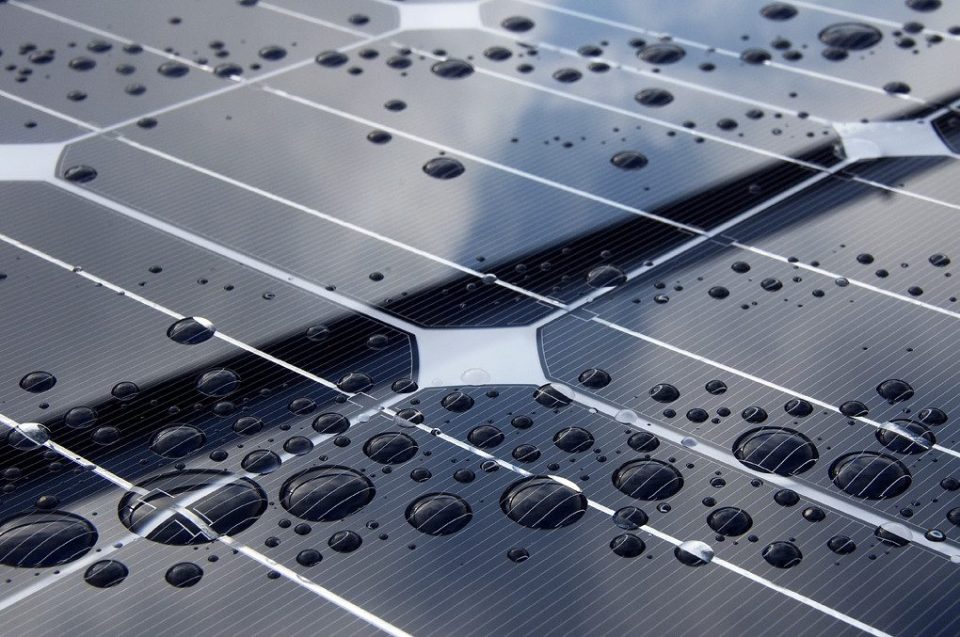
LIMA, Ohio (WOWO) — The city of Lima is putting solar panels on the water instead of land, officially bringing a four-acre floating solar array online at Twin Lakes Reservoir.
The 2-megawatt project, which will supply power for Lima’s water treatment operation, consists of 3,120 solar panels floating on the reservoir. According to WLIO, the project makes Lima home to the second-largest floating solar array in Ohio.
The city switched on the system Wednesday morning, marking the culmination of a multiyear effort involving Lima, D3Energy and other project partners.
The project is designed to generate clean electricity while reducing the city’s energy costs and preserving land that could otherwise be used for agriculture, housing or other development.
The array is expected to offset approximately 976 metric tons of carbon dioxide each year, according to WLIO.
Eric Bontrager, operations manager for the Lima Utilities Department, said using the reservoir gives the city a way to produce solar power without competing for valuable land.
“The use of the floating solar panels allows us to use areas of water that are not used for anything else,” Bontrager said. He added that the approach avoids taking land that could otherwise be used for farming or housing.
The project is located next to Lima’s water treatment plant, making the city’s water operation a direct beneficiary of the renewable-energy investment.
Lima officials have been developing the project for several years. City documents show the project was designed around a 2-megawatt system covering roughly four acres of Twin Lakes Reservoir. Earlier versions of the project called for more than 3,400 panels, with the final installation reported by WLIO at 3,120 panels.
The city has described the project as a way to turn one of its largest electricity users into a facility powered in part by renewable energy.
Lima’s water treatment plant handles nearly 14 million gallons of water each day, according to the city. Because the facility operates around the clock, electricity is a significant operating expense. City officials have projected substantial long-term savings from the solar installation.
The project is also intended to demonstrate how communities with limited available land can expand solar generation.
Stetson Tchividjian, managing director of D3Energy, said floating solar can provide an alternative when communities do not want to dedicate agricultural or developable land to large solar installations.
“There’s a land conservation piece that I think is a huge part of the conversation with any kind of environmental aspect,” Tchividjian said, according to WLIO.
He also pointed to potential secondary benefits from placing panels over water, including reduced evaporation and less algae growth.
Those potential benefits are tied to the panels’ ability to shade portions of the reservoir. The U.S. Department of Energy’s environmental review describes the Lima system as approximately 3,500 photovoltaic panels spread across four acres of the existing reservoir, with a total output of 2 megawatts.
Lima began pursuing the floating-solar concept in 2023. At the time, city officials said the project would be among the first of its kind in Ohio and could provide a model for other communities with reservoirs located near energy-intensive water treatment facilities.
Funding has included federal assistance. The city said a $2.4 million Department of Energy grant, along with nearly $900,000 in Inflation Reduction Act direct-pay tax credits, helped offset roughly half of the project’s cost. City officials have projected nearly $10 million in electricity savings over the system’s lifetime, including approximately $200,000 during the first year.
The project also reflects a broader push to use existing infrastructure and property for renewable-energy generation without taking additional land out of agricultural or residential use.
For Lima, the floating array serves a practical purpose beyond its environmental benefits: reducing the cost of running the city’s water system.
The city is now among the Ohio communities demonstrating how reservoirs can serve a second purpose — not only storing water, but also supporting electricity generation.
With the panels now operating, Lima officials will be able to track the system’s energy production, savings and other benefits as the city continues its transition toward renewable energy.
