

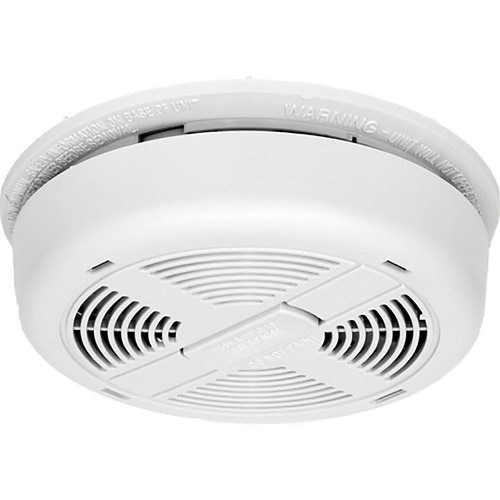
NORTON SHORES, Mich. (WOWO) — Fire departments across Michigan are searching for new sources of funding and equipment after state money for a program that provides free smoke and carbon monoxide detectors was eliminated.
The Michigan Bureau of Fire Services says it no longer has funding to purchase additional standard smoke alarms for statewide distribution after General Fund dollars for the MI Prevention program were not included in the current fiscal year.
That has already begun affecting local departments.
In Norton Shores, the fire department is down to only a handful of state-provided alarms, months before the next fiscal year begins in October.
Fire Marshal Don VanderKooi told WOOD TV8 that the department typically needs about five smoke alarms for an average home installation.
“We have about a handful of alarms,” VanderKooi said.
The department has installed more than 1,000 smoke alarms in homes since 2014, with the state program serving as its primary source for the equipment.
“The primary source of our smoke alarms have been through MI Prevention, or through the state, and because that funding is not approved, I don’t know when we’re going to get any more alarms,” VanderKooi said.
The funding reduction is affecting fire departments beyond Norton Shores. WOOD TV8 reports that departments in Grandville, Plainfield Township and Walker are among those also dealing with the loss of state-provided alarms.
Grand Rapids is not expected to be affected because the city operates its own smoke alarm program.
The MI Prevention program has provided smoke alarms and combination smoke and carbon monoxide detectors for local firefighters to install directly in residents’ homes.
That installation component is important, according to VanderKooi.
He said firefighters previously handed alarms to residents with instructions to install them. In some cases, firefighters would later discover the alarms still sitting unused.
“What we found previously was that many years ago, we would just hand out smoke alarms to people and have them install them,” VanderKooi told WOOD TV8. “We would go back later, and the smoke alarm would be sitting on the kitchen table and not installed.”
Having firefighters install the devices allows departments to make sure alarms are actually installed and placed appropriately.
The Michigan Bureau of Fire Services says the state program has resulted in more than 192,000 smoke alarms being installed in Michigan homes since its creation.
State officials also say the partnerships involved in the program have documented 141 instances in which smoke or combination alarms provided an early warning that helped save lives.
But the program’s future is now uncertain without legislative funding.
The Michigan Department of Licensing and Regulatory Affairs, which oversees the Bureau of Fire Services, said the program normally relies on General Fund money.
Those dollars were “deemed to be needed elsewhere for the State of Michigan to function,” according to the agency.
As a result, no General Fund money was provided to LARA for the program, leaving the Bureau of Fire Services without a source of funding to purchase additional standard smoke alarms.
The state says all remaining smoke and combination smoke/carbon monoxide alarms purchased with previous MI Prevention funding have already been allocated to local fire departments and other program partners.
There are no additional standard alarms available from fiscal year 2026 or earlier funding years, according to the Bureau of Fire Services.
Some specialized alarms for people who are deaf or hard of hearing remain available.
The state is also working with the Michigan Department of Health and Human Services on a new initiative that would provide carbon monoxide alarms to local fire departments for distribution and installation.
That effort, however, does not replace the broader smoke alarm program.
“The loss of funding does not change the importance of working smoke alarms or the tremendous work being done by Michigan’s fire departments and our prevention partners,” LARA said in a statement provided to WOOD TV8.
State officials are urging residents to make sure their smoke alarms are working and to test them regularly.
VanderKooi also reminded homeowners that smoke alarms have a limited service life and generally should be replaced about every 10 years.
He said residents who had alarms installed by the department years ago have begun contacting firefighters as those devices reach the end of their expected lifespan.
“The smoke alarms we put in maybe 10 years ago, we’ve had residents call because they know those smoke alarms, just like the gallon of milk in your refrigerator, have an expiration date,” VanderKooi said.
The need for functioning alarms is especially important because modern residential fires can become dangerous quickly.
The Bureau of Fire Services says synthetic furnishings, open-concept home designs and newer hazards such as lithium-ion batteries can contribute to rapidly developing fires.
Early warning can give residents more time to escape and can also help protect firefighters responding to the emergency.
The state is encouraging anyone who needs help obtaining or installing an alarm to start by contacting their local fire department.
Additional assistance may be available through the American Red Cross, nonprofit groups, fraternal organizations and other community partners that operate local fire-prevention programs.
For departments such as Norton Shores, the loss of the statewide supply means finding other ways to keep residents protected.
VanderKooi said his department is asking residents to test their alarms and contact the fire department if they do not have working detectors.
“We want to make sure that people test their smoke alarms, have working smoke detectors, and if they don’t, please call and let us know,” he said.
The department plans to use those requests and its records as it searches for alternative funding, including grants and partnerships with retailers and other community organizations.
VanderKooi said nonprofit organizations can provide some smoke detectors, but those supplies are much more limited than the inventory previously available through the state program.
The Bureau of Fire Services said the MI Prevention program demonstrated what can happen when state officials, local fire departments and community organizations work together on fire prevention.
“We are proud of what those partnerships have accomplished and remain committed to working with Michigan’s fire service to advance fire prevention and protect residents across the state,” the agency said.
For now, however, local fire departments are facing a practical problem: the need for smoke alarms continues even though the statewide funding that helped supply them does not.
Fire officials say residents should not wait for a fire to discover that a detector has stopped working. Homeowners and renters should test their alarms regularly, replace expired units and contact their local fire department if they need assistance obtaining or installing a working detector.
The state’s message remains clear even as the funding situation changes: working smoke alarms remain one of the most important tools residents have to get out safely when a fire starts.
