

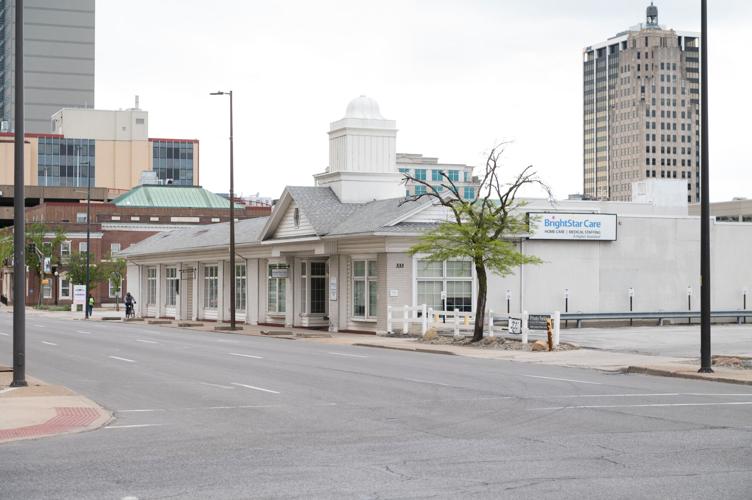
FORT WAYNE, Ind. (WOWO) — Fort Wayne’s proposed downtown homeless resource center has hit a major roadblock after City Council members rejected funding for the project Tuesday night.
The council voted 5-3 against spending the money needed to acquire and convert a building at 333 East Washington Boulevard into the proposed Anchor Resource Center. Republican council members Paul Ensley, Russ Jehl, Nathan Hartman, Marty Bender and Tom Freistroffer voted against the funding, while Democrats Geoff Paddock, Rohli Booker and Michelle Chambers supported it. The vote was reported by 21Alive News.
Mayor Sharon Tucker had asked the council to approve $2.75 million for the Fort Wayne Redevelopment Commission to acquire, develop and construct the facility. The proposal had been more than a year in the making and was part of Tucker’s broader effort to address homelessness in Fort Wayne.
The failed vote leaves that strategy in limbo.
The proposed center was designed as a 24-hour, low-barrier facility where people experiencing homelessness could access basic needs and connect with housing and other services. The city says the center would serve about 150 people a day and provide services including housing assistance, mental health counseling, workforce training, showers and bathrooms. The city describes the Anchor Resource Center as a “24/7 front door to housing and stability.”
The location and the low-barrier approach became the central points of opposition during months of debate.
Critics argued that putting the center downtown could affect businesses, a nearby school and police resources. Supporters countered that homelessness is already highly visible in the area and that a centralized facility could bring people off sidewalks, out of business entrances and into a coordinated system of services.
Councilman Russ Jehl was among the strongest critics of the location. He argued that downtown was already dealing with the effects of homelessness and warned against expanding those services in the same area.
“I think that area of downtown is becoming less vibrant because of the effect of the Rescue Mission,” Jehl said, according to 21Alive News. “And we should be very, very sober before we double down on that and bring even more of those peripheral things to that area.”
Tucker disagreed, saying the proposed center could actually reduce the problems businesses are dealing with now.
“Right now, those businesses have people that are sitting on their doorstep, sleeping in their doorsteps, using the restroom around their building and businesses,” Tucker said. She argued that the Anchor Resource Center, combined with enforcement, could move people away from businesses and reduce the burden on downtown merchants.
The phrase “low-barrier shelter” became one of the biggest sticking points.
The city has described the model as one that prioritizes immediate safety for clients, staff and neighbors over requirements such as background checks, sobriety, strict curfews and identification. Tucker said the model does not mean drugs or alcohol would be permitted inside the facility.
She also said “low barrier” could have practical implications for people who have difficulty finding shelter elsewhere.
“Low barrier could be a husband and a wife that want to stay together,” Tucker said.
She also pointed to veterans with service animals, saying some existing shelters do not allow pets.
Opponents remained concerned about what could happen around the facility, including loitering, drug use and the potential demand on police.
Council President Marty Bender said he was concerned the center could put additional pressure on police services downtown and potentially interfere with emergency response times.
The location also drew concern because of its proximity to a school and other youth-oriented facilities. During an August public forum, Pastor Joe Hoem of St. Paul’s Evangelical Lutheran Church and School said the proposed site was only 582 feet from the elementary school. Hoem said his congregation supports the concept of a low-barrier shelter but believes it should be located somewhere else.
The debate had already delayed the council’s decision for months.
Councilman Nathan Hartman originally pushed for more time and requested additional information, including a public forum. The city opened an online public comment process and later held a public meeting at the Grand Wayne Center on August 24. That meeting drew a standing-room-only crowd and included heated exchanges between supporters and opponents of the project.
Hartman remained concerned that the proposal would not solve the city’s broader homelessness problem.
“When I asked if people will still be living in tents after the center was built, the answer was yes,” Hartman said. “I don’t want to see people living in tents down by the river. Does this solve that? And the answer was no; this doesn’t provide overnight housing solutions for these individuals.”
That concern gets to the heart of the disagreement over the project: whether the proposed center would provide a coordinated starting point for people experiencing homelessness or simply concentrate existing problems in one part of downtown.
Councilman Paul Ensley said he favored a different location, identifying 4133 New Haven Avenue as a better option. He also questioned whether a low-barrier approach would do enough to encourage people toward sobriety, employment and self-sufficiency.
“I do think that our efforts as a community should be focused on promoting sobriety, employment and self-sufficiency,” Ensley said, adding that he believed the model could make it easier for people to remain on the street.
Councilman Tom Freistroffer took a different approach, saying the proposal was not necessarily a bad plan but that he was not convinced it was “the right plan.” He voted against the funding, saying he believed there were “still some stages to go through.”
Supporters argued that rejecting the project would not make homelessness disappear.
Councilwoman Rohli Booker said, “helping someone survive homelessness is not the same as encouraging them to remain homeless.”
Booker argued that Fort Wayne should not have to choose between addressing homelessness and maintaining a healthy downtown.
“We do not have to choose between compassion and economic development; we don’t have to choose between thriving businesses and helping people who are struggling,” Booker said.
Councilwoman Michelle Chambers also voted for the project. She said the people experiencing homelessness in downtown Fort Wayne are not an abstract problem and pointed specifically to a woman she has repeatedly seen sleeping in a wheelchair.
“She is not hypothetical; she is already downtown,” Chambers said.
Tucker had warned before Tuesday’s vote that rejecting the funding would leave the city without the specific downtown location she had proposed. In an interview with 21Alive News before the vote, Tucker said there was no backup location and that a rejection would delay what she called a coordinated response to homelessness.
Tucker said the city would continue supporting services connected to the Anchor Resource Center even without a physical building, but acknowledged that doing so would be more difficult.
“If the vote doesn’t go the way that we would like it to, then we will, as a city, continue supporting the Anchor Resource Center to provide services that they could provide to the best of their ability without having a location,” Tucker said. “It does make it harder, though, because part of being able to provide opportunity to resources is to have a location for people to be able to access those resources.”
The proposed $2.75 million purchase was the culmination of months of discussion after the city selected the East Washington Boulevard property in April. At the time, Tucker described the project as a low-barrier facility that would offer mental health counseling, workforce training, showers, laundry and sleeping accommodations.
The city’s broader homelessness strategy now faces an uncertain future following the 5-3 vote.
For downtown businesses and residents who opposed the East Washington Boulevard location, Tuesday’s decision represents a rejection of the proposed site and the current plan. For supporters, it means Fort Wayne still has people experiencing homelessness without the centralized facility they believe could connect them with services and housing.
And for the mayor’s administration, the immediate question is what comes next — because the council has now rejected the funding for the location that Tucker had spent months defending as the right plan, in the right place.
