

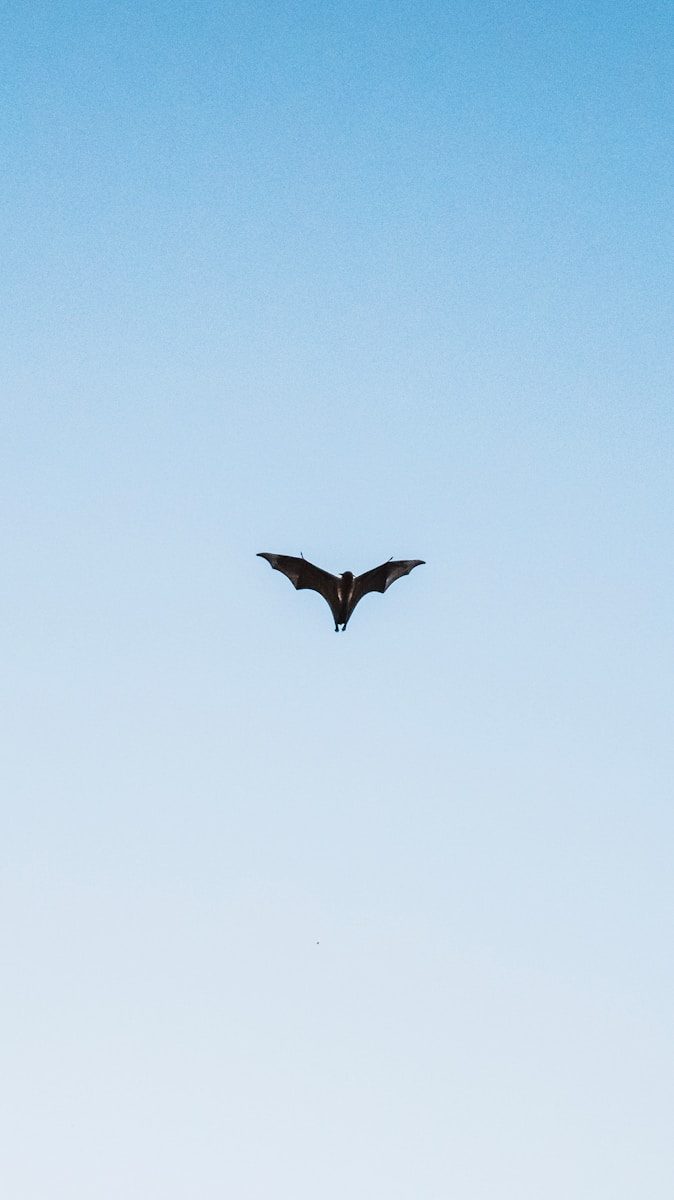
COLUMBUS, Ohio (WOWO) — Ohio wildlife officials are trying to determine why unusually large numbers of bats are becoming sick or dying during the summer, with reports continuing for a second consecutive year.
The Ohio Division of Wildlife has received reports of bats, particularly young bats, being found sick, dying or dead at multiple locations across the state. Southwestern and central Ohio appear to be among the areas experiencing the greatest number of reported deaths.
The summer die-offs are raising concerns because Ohio’s bat population is already under pressure from white-nose syndrome, a fungal disease that has caused significant bat deaths during the winter.
Now, wildlife officials are investigating a separate and unexplained pattern of bats dying during warmer months.
Central Ohio resident Amanda Griffin told WCMH-TV that she began finding dead bats on her driveway in early June.
Griffin said she had also noticed bats flying around her property at night, but finding multiple dead bats was something she had never experienced before.
“I was like, really surprised to see them,” Griffin said.
Wildlife rehabilitators say the reports have become increasingly concerning.
Gwen Hoogendoorn, president of the Ohio Wildlife Rehabilitators Association, said some colonies have had between five and more than 30 sick or dying baby bats at a single location.
“We don’t have the answers for them when they call and say, ‘Hey, I have all of these bats that are dying,'” Hoogendoorn said.
She said rehabilitators have been dealing with what appears to be an unfamiliar disease for the past several years.
“A disease that we’re not really familiar with has shown up about the past two or three years and it’s progressing more and more,” Hoogendoorn said.
Researchers have been collecting samples and working with state wildlife officials to try to identify what is killing the bats.
Rabies testing has come back negative, but officials have not identified a definitive cause.
David Donahue, development and communications manager with the Ohio Wildlife Center, said wildlife professionals are collecting whatever samples they can before sending information to state officials for further testing.
“We take every kind of collection we can, we contact the state, and then the state will then start performing testing to determine what’s going on,” Donahue said.
The Ohio Division of Wildlife says tests conducted on bats this year have been inconclusive.
Investigators are also looking beyond infectious disease. Officials are testing to determine whether pesticides or herbicides could be contributing to the deaths.
The state is also developing a testing strategy for next year in case the unusual die-offs continue.
The concern extends beyond the loss of wildlife.
Bats play an important role in controlling insects, including mosquitoes, moths and beetles that can damage crops.
Hoogendoorn said the loss of bats could ultimately affect agriculture if farmers have to rely more heavily on pesticides to control insects.
“One bat can eat 1,000 mosquitoes in an hour every night, and they eat moths and crop-destroying beetles,” Hoogendoorn said. “When we no longer have these bats, the farmer has to spray more, which now raises the cost of your food.”
The full agricultural impact of the current bat deaths is not yet known, and officials have not established that the unexplained mortality event is responsible for any increase in pesticide use or food prices.
But wildlife advocates say the potential ecological consequences make finding the cause a priority.
Bats are already dealing with white-nose syndrome, which has devastated populations of several bat species in North America. The appearance of another possible threat during the summer adds another challenge for wildlife managers.
For wildlife rehabilitators, the uncertainty has been frustrating.
“We feel helpless. We want to save these bats. We want to help the public who are finding all of these bats,” Hoogendoorn said.
State officials are asking the public to help identify locations where unusually large numbers of bats are dying.
If three or more dead bats are found within a single day and in the same location, residents should contact the Ohio Division of Wildlife for instructions.
The agency can be reached at 1-800-WILDLIFE, or 1-800-945-3543.
A single dead bat can generally be disposed of in the trash, according to the guidance provided by wildlife officials.
People who encounter sick or downed baby bats should not attempt to care for them on their own. Those animals can be taken to a licensed wildlife rehabilitator for assessment and possible treatment.
For now, scientists are continuing to investigate.
The second consecutive year of unusual summer bat deaths has given Ohio wildlife officials more data to work with, but testing so far has not provided a clear explanation.
Until researchers determine whether disease, environmental exposure, pesticides, herbicides or another factor is responsible, officials are relying on reports from the public and continued testing to track the problem.
The investigation could become increasingly important if the deaths continue into another year, particularly as Ohio’s bat populations already face the ongoing threat of white-nose syndrome.
